


Comprehensive Guide: AI Productisation for Knowledge Professionals
In today’s fast-evolving landscape, knowledge workers—coaches, consultants, agencies—face a critical shift: how to transform their expertise into scalable, repeatable, AI-enabled outcomes. This isn’t about slapping a chatbot on your website; it’s about designing expert-driven products that deliver diagnostics, roadmaps, and structured recommendations in branded reports—dynamic, personalized, and adaptable to every new lead.
Why AI Productisation Matters for Service Providers
Traditional service models rely heavily on time-based engagements—hours spent, meetings held, advice delivered. While valuable, this approach hits scalability and consistency limits. AI productisation offers a new paradigm: packaging expertise into branded, outcome-first products that can be delivered asynchronously, consistently, and at scale.
Crucial to this shift are key concepts: the AI Product Canvas, the six core beliefs, and the emphasis on value-first design. These principles ensure products aren’t just tools but strategic offerings that communicate trust, professionalism, and insight—all vital in a competitive landscape.
Core Concepts: What Is AI Productisation?
AI productisation is about creating repeatable, AI-enabled experiences that encode your expertise into interactive, branded outputs. Unlike simple tools (like forms or chatbots), these products embody your thinking, delivering diagnostics, recommendations, and roadmaps that are tailored, credible, and scalable.
The AI Product Canvas: Making Logic Visible
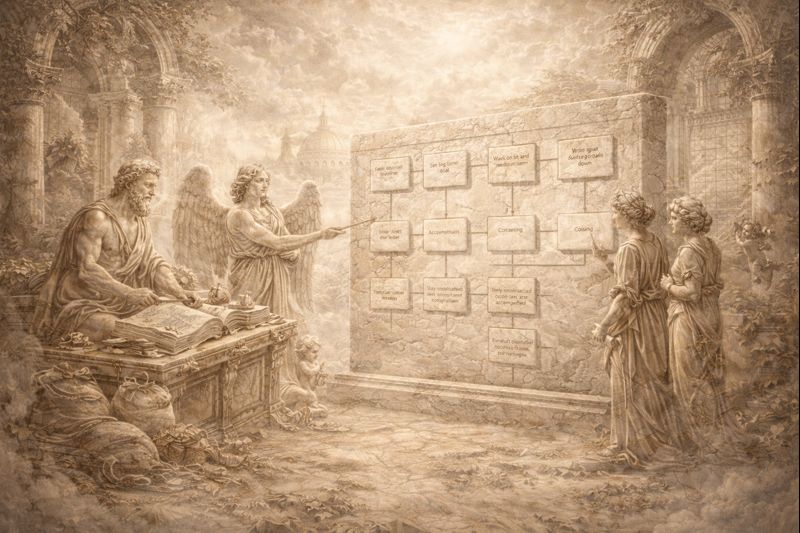
At the heart of productisation is the AI Product Canvas, a visual map comprising three core elements:
- Inputs: Your expertise, client data, context.
- Reasoning: The AI’s interpretative logic—how it synthesizes input using structured questions.
- Outputs: Branded reports, presentations, or insights.
This canvas makes product logic transparent—crucial for non-coders. It separates AI reasoning from conditional logic, emphasizing fewer, well-structured questions that unlock deeper, context-aware results.
AI Reasoning vs Conditional Logic
While traditional conditional logic is rigid, AI reasoning uses probabilistic interpretation based on structured questions. A few well-crafted questions—say, 3 to 5—can generate nuanced, personalized outcomes that adapt seamlessly to each new client scenario.
The Six Core Beliefs and Design Principles
Guided by fundamental beliefs, your product design should prioritize:
- Value First: Focus on delivering meaningful outcomes rather than feature hype.
- Outcomes: Diagnostics, roadmaps, recommendations—clear, structured results.
- Visibility: Make your logic and flow transparent, reinforcing trust.
- Ownership: Empower non-technical owners to update and govern products.
- Simplicity: Avoid unnecessary complexity—clarity drives adoption.
These beliefs shape branding, governance, and continuous improvement.
Front-Door Lead Generation: Designing Value-First Experiences
Your sales journey is an instant AI diagnostic that pre-qualifies and excites prospects.
The Front Door to Delivery
Imagine prospects arriving via your website with a simple question: "Help me evaluate my business concept". Instead of a form, they receive a personalized, branded report within moments—diagnosing strengths, pinpointing gaps, and suggesting next steps. This builds trust and shortens sales cycles.
Example: The Business Concept Validator
This tool asks 3-5 targeted questions, estimates market fit, and generates a branded report. It’s a scalable way to demonstrate expertise, filter prospects, and accelerate engagement.
Building Branded Outputs: Reports & Presentations > Chat Products
While chatbots are popular, fully structured, branded reports and presentations deliver superior credibility. They establish your authority, provide clear next steps, and can be reused across engagements.
Best practices:
- Format options: PDFs, branded web reports, slide decks.
- Next-step clarity: End with specific calls to action.
- Visual polish: Use consistent branding, diagrams, and summarized insights.
Empowering No-Code Ownership
Contrary to hype, no-code isn’t about non-ownership; it’s about equipping you to own and evolve your products.
The AI Product Canvas acts as a visual, interactive blueprint, enabling you to:
- Make adjustments without code.
- Maintain control over logic and branding.
- Collaborate with non-technical team members.
Workflow: From Input to Output
Map your inputs, craft questions as AI reasoning modules on the Canvas, and generate outputs—branded reports or digital assets. Refinement is visual and iterative—adjust questions, see immediate results, and optimize without rebuilding.
Deployment options include sharable links, embedded widgets, or integrated campaigns—reusable across client projects.
Use Cases & Patterns
- Lead Generation: Instant diagnostics to attract prospects.
- Pre-Qualification: Quick assessments to filter high-value clients.
- Onboarding: Personalized roadmaps to accelerate initiation.
- Ongoing Guidance: Continuous, adaptive reports.
- Sales Enablement: Demonstrations of expertise that close deals faster.
Each use case leverages the product’s structure—diagnostics, branded reports, interactive presentations.
Pitfalls & Guardrails
Beware of:
- Overpromising: Tackle realistic outcomes aligned with your expertise.
- AI Slop: Focus on meaningful, value-driven outputs.
- Data Quality: Use reliable input data.
- Hype: Prioritize robust systems over flashy demos.
Regular checks ensure your products deliver tangible value.
2-Week Sprint Blueprints
Prerequisites: Familiarity with no-code tools, access to AI Product Canvas templates, branding guidelines.
Sample Tasks:
- Day 1-2: Define core outcome—what’s the diagnostic or report?
- Day 3-4: Map inputs and craft 3-5 questions.
- Day 5-6: Build initial product on Canvas.
- Day 7-8: Test with sample inputs, refine questions.
- Day 9-10: Design branded report/template.
- Day 11-12: Deploy link or embed.
- Day 13-14: Gather feedback and iterate.
Milestones include first output, second iteration, and deployment.
Success Metrics
Track:
- Lead quality and conversion rates
- Time-to-first-output
- Client engagement with branded reports
Use a simple rubric—high scores indicate clarity, relevance, and trust.
Visuals & Templates
- Diagram of Canvas components (inputs, reasoning, outputs)
- Branded report deck template
- Sample minimal-input pattern (3-5 questions) with example output
Practical Prompt Examples
- Questions: "What are your main challenges in scaling?" "What resources do you currently lack?" "What specific outcomes do you desire?"
- Output: A branded report detailing challenges, strategic roadmaps, and next steps.
Conclusion & Next Steps
Ready to elevate your expertise? Launch a 2-week sprint, build a pilot for a target client segment, or adapt an existing tool into a branded AI product. The future is here: turn your thinking into scalable, credible products—empowered by the AI Product Canvas.
Embrace the shift from service as time to service as scalable product. Your expertise, amplified and branded, will differentiate you in a crowded marketplace and create lasting client value.